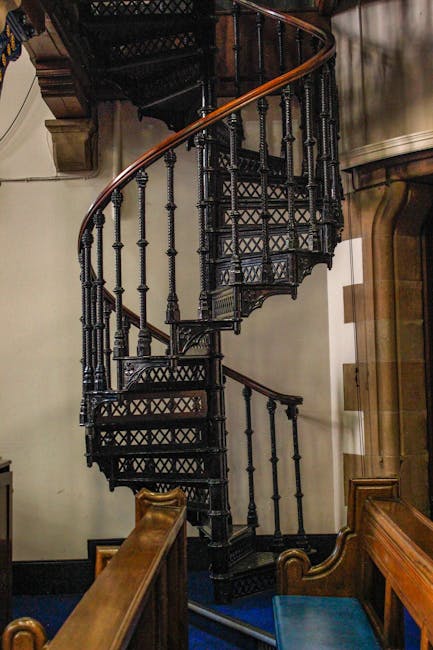
Moving with Narrow Finchley Victorian Stairs: Practical Fixes
Victorian staircases look lovely right up until moving day. Then the narrow turns, tight landings, low headroom, and awkward banisters suddenly become the main event. If you are moving with narrow Finchley Victorian stairs, the challenge is usually not the distance between homes; it is the few metres between the front door and the upper floor. That part can make an otherwise simple move feel oddly technical.
The good news? There are practical fixes. With the right prep, the right equipment, and a sensible moving plan, even a steep, narrow staircase can be managed without chaos. In this guide, we will walk through what makes these stairs tricky, how professional movers work around them, which methods actually help, and when it makes sense to use services such as home moves, man and van support, or packing and unpacking services. Simple idea, really: protect the staircase, protect the furniture, protect your back.
Truth be told, Victorian stairs are not impossible. They just punish poor planning. And if you have ever watched a wardrobe pause halfway up a turn because someone measured "roughly," you will know exactly what I mean.
Table of Contents
- Why Moving with Narrow Finchley Victorian Stairs: Practical Fixes Matters
- How Moving with Narrow Finchley Victorian Stairs: Practical Fixes Works
- Key Benefits and Practical Advantages
- Who This Is For and When It Makes Sense
- Step-by-Step Guidance
- Expert Tips for Better Results
- Common Mistakes to Avoid
- Tools, Resources and Recommendations
- Law, Compliance, Standards, or Best Practice
- Options, Methods, or Comparison Table
- Case Study or Real-World Example
- Practical Checklist
- Conclusion
- Frequently Asked Questions
Why Moving with Narrow Finchley Victorian Stairs: Practical Fixes Matters
Narrow Victorian stairs are a very particular kind of moving problem. They are often steep, sometimes curved, and frequently built before modern furniture dimensions became the norm. In Finchley, as in many London areas with older housing stock, you can find staircases that are visually elegant but operationally awkward. The bannister takes up space. The turns steal clearance. The tread depth can feel tight. And when furniture has to be angled, rotated, or lifted over a landing, every inch matters.
Why does this matter so much? Because most moving damage happens at the exact point where people get impatient. A scratched wall, chipped stair edge, jammed sofa, or strained shoulder usually comes from a rushed decision, not a huge disaster. You can avoid a lot by treating the staircase as the main worksite, not a side detail.
There is also a practical local angle. Finchley homes can include period terraces, maisonettes, and converted flats where access is less forgiving than a newer build. If the access is tight, then the move needs to be designed around access, not just the list of items. That is the real shift in mindset.
Expert summary: The stairs are not the obstacle to "get through" on moving day; they are the part you plan for first. Once you do that, the rest becomes much calmer.
How Moving with Narrow Finchley Victorian Stairs: Practical Fixes Works
The process works by reducing friction in every sense of the word. You reduce physical friction by protecting surfaces and choosing the right handling method. You reduce logistical friction by measuring everything before moving day. And you reduce emotional friction by removing last-minute guesswork. That sounds obvious, but honestly, most stair problems come from the opposite approach: turning up with a van, a sofa, and hope.
A proper narrow-stair move usually follows a few stages. First comes assessment. That means checking stair width, landing space, ceiling height, turn radius, and the size of the furniture in relation to each bend. Then comes planning. This might involve disassembly, padding, route clearing, and assigning two or more people to awkward items. After that, the team moves item by item, with the staircase protected using covers, blankets, or floor guards if needed. Finally, pieces are reassembled where possible once they are safely inside.
For smaller moves, a flexible service such as man with van help can be enough if the items are manageable and the access is understood in advance. For larger or more complex homes, a fuller house removalists setup may be more sensible, especially when there are heavy wardrobes, beds, white goods, or awkward stair turns. Different moves, different tools. Not glamorous, but true.
The best results usually come from combining practical labour with a realistic plan. No theatrics. Just measurements, protection, teamwork, and the patience to say, "No, that item should not be forced up there in one piece."
Key Benefits and Practical Advantages
When narrow stair access is handled properly, the benefits go beyond avoiding damage. You save time because fewer items get stuck or need to be reattempted. You save money because you are less likely to cause damage to furniture, walls, or the property itself. You also reduce the physical strain on everyone involved, which matters more than people admit at the planning stage.
- Less damage to stair walls and banisters: Padding and planning make a big difference on painted period surfaces.
- Safer lifting: Better handling means fewer sudden twists, slips, or "just give it another shove" moments.
- Faster unloading: Once access is mapped properly, the move tends to flow more smoothly.
- Better furniture survival: Disassembly and protective wrapping can prevent scrapes, corner dents, and broken fittings.
- Lower stress on moving day: People work better when they know the route and the plan.
There is another benefit that gets overlooked: confidence. When the team knows a three-seater sofa will clear the turn because someone measured it properly, the whole move feels less like guesswork. That calm is worth a lot. It is the difference between a day that feels organised and one that feels like a mild rescue operation.
Who This Is For and When It Makes Sense
This approach is useful for anyone dealing with period housing, compact maisonettes, split-level properties, or upper-floor flats reached by narrow internal stairs. It is especially relevant if you are moving bulky furniture, appliances, bookshelves, beds, or anything with a rigid frame. If you have ever looked at a staircase and thought, "That corner looks... optimistic," then yes, this section is for you.
It makes sense when:
- the stairwell is too narrow for standard furniture delivery assumptions
- there is a turn, landing, or low ceiling that limits lifting angles
- the property has period features worth protecting
- the furniture can be dismantled, but only carefully
- you want to avoid damage rather than fix it afterwards
It also makes sense if you are comparing move types and need a smaller, practical service rather than a full-scale removal. Some readers only need a few items shifted, and a targeted option such as furniture pick-up can be more appropriate than organising a whole van load. Others need a more complete transport solution and might look at moving truck support or removal truck hire. The right choice depends on volume, access, and how much lifting is involved.
Step-by-Step Guidance
If you want a clean result, this is the part to follow carefully. It is not complicated, but it is very sequence-driven. Skipping one step tends to create a problem three steps later. Funny how that works.
- Measure the staircase properly. Check the narrowest point, the landing width, the height to the ceiling, the curve on the turn, and the space at the top and bottom. Measure the furniture too, including awkward protrusions like handles, legs, and armrests.
- Identify what can be dismantled. Beds, tables, wardrobes, and some shelving units may come apart. Keep fixings in labelled bags. That tiny step saves a lot of grief later.
- Clear the route. Remove rugs, picture frames, loose items, shoes, and anything that could cause a trip. Open doors fully and keep traffic out of the way.
- Protect the staircase. Use furniture blankets, corner guards, and floor protection where needed. On older homes, this is more than cosmetic. Victorian paintwork and plaster can be fragile.
- Assign the right number of handlers. One person at the bottom, one at the top, and possibly a third to guide corners or protect walls. Heavy items need coordination, not enthusiasm.
- Move the easiest pieces first. Clearing smaller items creates room and confidence before the awkward objects arrive.
- Use the correct angle. Often a sofa or mattress has to be rotated vertically or diagonally. If it still does not fit, do not force it. Reassess.
- Rebuild only after the item is in position. Reassembling halfway on the stairs is rarely wise. Better to get it through safely, then put it back together in the room.
A practical tip many people miss: keep one person free to watch corners and walls. It sounds old-fashioned, but a spotter can prevent more damage than another pair of hands pushing from behind.
Expert Tips for Better Results
In our experience, the smoothest stair moves are the ones where people make small decisions early. A few inches here, a screw removed there, a blanket folded properly around a corner. Nothing dramatic. Just the sort of detail that saves the day.
- Photograph each awkward item before dismantling. It helps with reassembly and makes missing parts easier to spot.
- Label wall-side corners on furniture. If one edge is more exposed, protect it first.
- Use gloves with grip. They help with control, especially on smooth varnished wood or wrapped items.
- Keep water bottles nearby. On a warm day, or after a few stairs, small breaks matter. Simple, but overlooked.
- Plan the order of the load. Heavy and awkward items should not be left until everyone is tired.
- Speak up early if something feels wrong. A pause is cheaper than a repair. Always.
If you are booking help, look for teams that are comfortable with difficult access. For some jobs, a straightforward man and van arrangement can be a practical fit. For bigger or more complicated properties, you may want a service that is set up for fuller household logistics, such as home moves. The point is to match the service to the stair reality, not to the dream version of the stair reality.
Common Mistakes to Avoid
This is where things often unravel. Not because the stairs are malicious, but because people underestimate them. Victorian access is famously good at exposing overconfidence.
- Not measuring before moving day: Guessing is not a strategy.
- Assuming all furniture fits upright: Many items need rotation or dismantling.
- Forcing items around tight bends: This is how walls, banisters, and furniture get damaged.
- Ignoring weight distribution: A piece may be wide but light, or narrow but awkwardly heavy. Both matter.
- Leaving protection until the last minute: By then, people are already carrying things.
- Trying to do everything with too few people: That "we can manage" moment often becomes "we really should have asked for help."
Another small but common issue: forgetting that older staircases are not perfectly uniform. One step may be slightly shallower, one corner tighter than expected, one handrail more intrusive. Old houses keep secrets. Some are charming. Some are mildly annoying.
Tools, Resources and Recommendations
You do not need a warehouse of specialist kit, but the right tools help enormously. Most stair-related moving problems are made easier with simple, sensible equipment rather than expensive gimmicks.
| Tool or Resource | What It Helps With | Why It Matters |
|---|---|---|
| Furniture blankets | Surface protection | Reduce scratches, dents, and paint transfer |
| Ratchet straps or load straps | Control and balance | Keep bulky items steady during handling |
| Corner protectors | Wall and furniture edges | Useful on tight Victorian turns |
| Gloves with grip | Safe handling | Improves control on smooth or wrapped surfaces |
| Measuring tape | Planning fit and clearance | The most important tool, honestly |
| Labelled fixings bags | Reassembly | Saves time and prevents missing parts |
For some moves, particularly those involving multiple rooms or a full household, support services such as packing and unpacking services can take a lot of pressure off the day itself. And if you are clearing one or two bulky items rather than relocating the whole home, a focused service like furniture pick-up can be the cleaner solution. Sometimes less is more. Simple as that.
Law, Compliance, Standards, or Best Practice
For a residential move like this, the main concerns are health and safety, property care, and reasonable handling practice. There is no need to overcomplicate it, but there is a responsibility to work safely and avoid avoidable damage. In the UK, movers and homeowners typically follow sensible manual handling practice, careful use of equipment, and good housekeeping around walkways and access points. That is the broad expectation.
If you are hiring help, it is reasonable to ask whether the team is insured, how they manage damage protection, and how they handle difficult access. You do not need a lecture. You just need clear answers. A reputable team should be able to explain how they protect stair edges, how many people they use for larger items, and what happens if an item simply will not fit in the intended orientation.
Best practice also means honesty. If a wardrobe is too tall or a sofa too wide for the staircase, say so early. The safest decision may be dismantling, alternative access, or rethinking the move plan altogether. And yes, if that means using a different transport option or splitting the move into stages, that is still a sensible outcome.
Options, Methods, or Comparison Table
There is no single right method for every narrow-stair move. The best option depends on how much you are moving, how awkward the items are, and whether the property access allows careful handling. Here is a straightforward comparison.
| Method | Best For | Strengths | Limits |
|---|---|---|---|
| DIY with friends | Small loads, light furniture | Low cost, flexible timing | Higher risk of damage or injury if the stairs are awkward |
| Man and van | Smaller home moves and a few bulky items | Practical, cost-effective, adaptable | May not suit very heavy or complex stair access without planning |
| House removalists | Full home moves with multiple large items | More support, better coordination, smoother handling | More involved booking and higher overall service level |
| Removal truck hire | Moves needing larger transport capacity | Useful for volume and organised loading | Still requires careful stair handling at the property |
If you are still deciding, think about the most difficult item first, not the easiest one. That usually reveals the right method pretty quickly.
Case Study or Real-World Example
Here is a realistic scenario. A couple in Finchley is moving out of a Victorian terrace with a steep internal staircase and a tight landing. They have a bed frame, mattress, two bookcases, a chest of drawers, and a sofa that looked fine in the showroom and slightly less fine in the hallway. The first instinct is to carry everything as-is. The smarter plan is to measure the staircase, dismantle the bed frame, remove shelves from the bookcases, wrap the sofa corners, and move the lighter items first.
On the day, the movers place protection on the walls near the turn and keep one person on the landing to guide the sofa angle. The bed frame goes up in sections. The chest of drawers is moved separately after the route is clear. There is a brief pause halfway through the sofa lift, because the turn is tighter than expected. Not a drama, just a recalculation. The team rotates the item, resets their grip, and finishes cleanly.
What changed the outcome? Not brute force. Planning. The staircase did not get easier. The move got smarter. That is the whole story, really.
Practical Checklist
Use this before moving day. It is short on purpose.
- Measure stair width, landings, and ceiling clearance
- Measure every bulky item, including protruding parts
- Decide what must be dismantled before the move
- Label screws, bolts, and fittings in sealed bags
- Protect walls, banisters, and floor edges
- Clear the hallway and stair route completely
- Confirm how many people will handle heavy items
- Plan the order of loading and unloading
- Keep tools, tape, and blankets close at hand
- Pause and reassess if an item does not fit comfortably
If you tick most of those boxes, you are already ahead of the game. A lot ahead, actually.
Get a free quote today and see how much you can save.
Conclusion
Moving with narrow Finchley Victorian stairs is rarely about strength alone. It is about judgement, preparation, and knowing when a piece of furniture needs a new angle rather than more pressure. Once you measure properly, protect the route, choose the right handling method, and match the move to the right service level, the whole process becomes much more manageable.
That is the real practical fix: make the staircase part of the plan from the start. Do that, and the move feels less like a battle with old architecture and more like a well-run transfer through it. A bit of patience goes a long way in a Victorian house. Funny old places, but they do reward careful hands.
And if you need a trusted place to start your planning, you can explore about us details, review the terms and conditions, or use the contact us page when you are ready to talk through access, timing, and the awkward bits. Sometimes the smallest conversation saves the biggest headache.
Frequently Asked Questions
How do you move furniture up narrow Victorian stairs?
Start by measuring both the staircase and the furniture, then dismantle anything that can be safely taken apart. Protect walls and banisters, use at least two handlers for bulky items, and rotate the item as needed rather than forcing it straight up the stairs.
What is the biggest problem with Victorian staircases?
The main issue is usually a combination of narrow width, tight turns, and steep pitch. Even if a piece of furniture is not especially heavy, the turning space at a landing can make the move awkward very quickly.
Should I dismantle my furniture before moving day?
Yes, where practical. Beds, wardrobes, tables, and shelving units often move more safely in sections. Dismantling also reduces the risk of damaging walls or getting stuck on a turn.
Can a sofa fit up a narrow staircase?
Sometimes, yes, but it depends on the sofa shape, stair width, landing clearance, and ceiling height. Sofas often need to be tilted vertically or rotated on the turn. If that still does not work, a different access plan may be needed.
Is a man and van service enough for a staircase move?
It can be, especially for smaller moves or a few items, provided the access has been discussed in advance. For larger homes or heavier furniture, a more comprehensive service may be a better fit.
How do I protect old walls and bannisters during a move?
Use furniture blankets, corner guards, and careful route planning. It also helps to assign one person to watch contact points during the move. That one step can prevent a lot of minor damage.
What should I measure before booking movers?
Measure the narrowest stair width, the landing dimensions, ceiling height near the turn, and the size of the largest furniture pieces. Add handles, legs, and anything else that changes the shape of the item.
How far in advance should I plan a difficult staircase move?
The earlier the better. Even a short planning window helps you identify what needs dismantling, what needs protection, and whether you need extra help or a different service type.
What if an item will not fit on the stairs?
Do not force it. Pause, re-measure, and consider dismantling or a different moving method. Forcing a tight fit usually causes damage and wastes time.
Are packing services useful for narrow stair moves?
Yes, especially if you want items packed tightly, labelled properly, and prepared for easier handling. Good packing can reduce awkward shapes and protect fragile edges on the move.
Does moving in a Victorian house always take longer?
Not always, but it often does if access is difficult or items need dismantling. Careful planning can keep the move efficient, even if the stairwell is a bit of a bottleneck.
What is the safest way to move heavy items upstairs?
The safest approach is to combine proper lifting technique, enough helpers, route protection, and a realistic assessment of whether the item should be dismantled first. If there is any doubt, choose caution over speed.